

Marble Crystallization
Professional marble crystallization in the UAE. Restore shine, hardness & scratch resistance to marble floors. Chemical hardening process.
Reviewed by Delight IFM Technical Team
- Certified Professionals
- Eco-Friendly Products
- Same-Day Service
- Satisfaction Guaranteed
- Abu Dhabi & Dubai Coverage
Marble Crystallization Solutions
Book Professional Marble Crystallization Services with Us Today
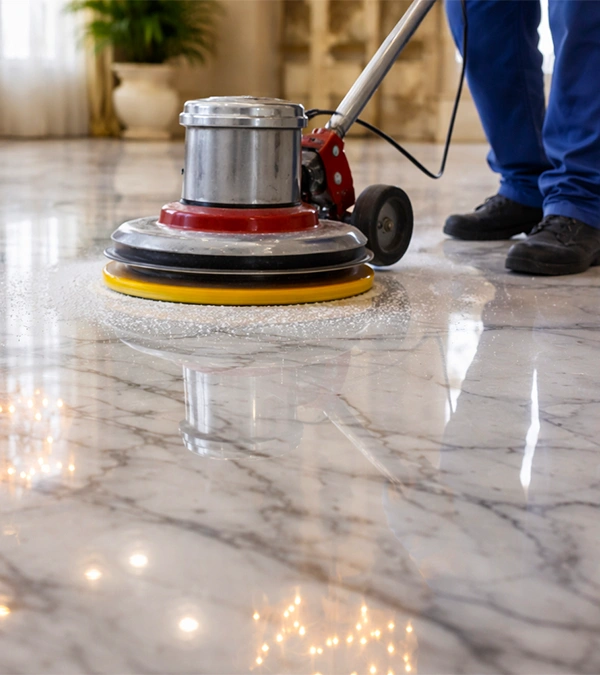
Marble crystallization is a professional stone restoration process that hardens marble chemically and brings back its natural shine. It works on marble, travertine, limestone and the other calcium-based natural stones. The method is to apply a crystallization compound, usually one containing magnesium fluorosilicate, then work it with a weighted rotary machine to generate heat and friction. That triggers a thermochemical reaction between the compound and the calcium carbonate in the marble, forming calcium fluorosilicate, a crystalline structure up to 30% harder and far more reflective than untreated stone. The shine you get comes from within the marble itself, rather than sitting on top as a coating that wears off.
Delight International Facilities Management provides expert marble crystallization in Dubai and Abu Dhabi, for villas, apartments, commercial offices, hotel lobbies, retail showrooms and institutional buildings. Our trained stone care specialists use professional-grade compounds and calibrated weighted machines to get consistent, mirror-finish results every time. Restoring a neglected marble foyer or keeping a five-star hotel's floors pristine, either way, we bring the expertise and the equipment to make the results last.
How Marble Crystallization Works
The process follows a precise sequence, and that sequence is what decides how good the results are and how long they last. It starts with a thorough clean, to get all the dirt, grime and residue off. Any existing sealants, waxes or coatings are then stripped away to expose the raw marble, because those barriers stop the compound bonding with the stone.
With the surface prepared, the technician applies the crystallisation powder or liquid in controlled sections. Then a weighted rotary machine fitted with steel wool pads is passed over the treated area at a set speed and pressure. The friction and heat it generates activate the thermochemical reaction between the compound and the marble's natural calcium, and that reaction turns the surface layer into calcium fluorosilicate, a dense, hard, glassy structure chemically bonded to the stone.
This is repeated over several passes until the shine and hardness are where they should be. Each pass builds on the last, taking the surface hardness and reflectivity up a little further each time. A skilled technician can get a reflection clarity close to a mirror, with the stone sitting noticeably higher on the Mohs hardness scale than it did before. The last step is a quality inspection across the whole area, checking the shine is uniform, the hardness is consistent, and nothing has been missed or left patchy.
Crystallisation is fundamentally different from polishing or waxing, and it is worth understanding why. Diamond polishing physically removes a thin layer of stone to expose a fresh surface, which means every treatment thins the marble a little more over the years. Waxing lays a sacrificial coating on top that wears away quickly under foot traffic. Crystallisation does neither. It transforms the existing surface chemically without removing any material, which makes it the most sustainable long-term way to maintain a marble floor.
When You Need Marble Crystallization Service
Crystallisation works as both a restorative and a preventive treatment. On a new marble installation, an initial treatment hardens the surface before any foot traffic gets to it, which pushes back the point at which the first signs of wear show. That matters most in commercial spaces, where the heavy traffic starts the moment the fit-out is done.
On existing floors, a few things tell you crystallisation is overdue. When mopping no longer brings the shine back, the surface hardness has dropped below what cleaning alone can fix. Scratch patterns from foot traffic, especially along the main pathways and around doorways, mean surface abrasion that will get worse quickly if it is left. Etch marks from acidic substances, common cleaning agents, citrus juice, vinegar, show up as dull whitish patches that break up the even look of the floor. And when spills soak in rather than sitting on top, the marble's density has been compromised and the staining risk has gone up.
Commercial properties, hotels, corporate offices and retail spaces, do best on a scheduled crystallisation programme, usually quarterly or twice a year. Keeping the appearance and hardness topped up continuously that way avoids the need for costly full restoration later. Homes with marble in the entryway, living areas, kitchen or bathrooms should schedule it annually, or more often in a household with children, pets or heavy furniture use.
It is also the right finishing step after other restoration work. After diamond grinding has removed deep scratches or levelled an uneven surface, crystallisation adds the hardening and shine that grinding on its own cannot. After honing, which smooths the surface to a matte or satin finish, crystallisation lays on the high-gloss reflective layer many owners prefer. Put grinding, honing and crystallization together and you get a full restoration that can make decades-old marble look very nearly new.
Regional Considerations
The UAE's climate makes marble harder to maintain, which is exactly why regular crystallisation matters so much here. In a desert environment, fine sand gets tracked indoors constantly, through foot traffic, through the air circulation, through open doors. Underfoot, those particles act like sandpaper and wear marble down faster than it ever would in a temperate climate. Properties near construction zones or on the coast catch even more of it.
Then there is the humidity. Summer levels outdoors often top 80 to 90%, and against the air-conditioned interior that creates condensation cycles that affect natural stone. The moisture swinging back and forth drives salt crystallisation inside the stone's pores, a process called efflorescence, which weakens the surface layer and leaves it more prone to wear. A regular crystallisation treatment makes the surface denser and less porous, so moisture has a harder time getting in.
Because marble is used so widely here, in both homes and commercial buildings, demand for crystallisation runs all year. It is the premium flooring material of choice across the region, turning up in villa living rooms, apartment lobbies, hotel corridors, mosque interiors, shopping mall common areas and corporate reception zones. A lot of these floors run to hundreds or thousands of square metres, which takes a professional team with industrial-grade equipment to treat efficiently.
Water quality is another local factor people forget. The UAE runs on desalinated water, which has a different mineral makeup from natural groundwater, and cleaning solutions mixed with it can leave mineral deposits on marble over time. Those deposits dull the finish, and they interfere with how well the crystallisation compound bonds if they are not cleaned off first. Our technicians allow for this during surface preparation to make sure the compound bonds properly.
Temperature plays a part too. In summer, marble in uncooled spaces, parking garages, outdoor corridors, building entrances, can reach surface temperatures that speed up the chemical degradation of untreated stone. Crystallized marble handles that thermal stress better thanks to its hardened surface, which makes the treatment especially worthwhile for the semi-outdoor and transitional areas you find in UAE properties.
Signs Your Marble Needs Crystallization Treatment
Dull, scratched marble keeps deteriorating quietly until it is treated. Ignore the warning signs and the surface damage works its way deeper into the stone, which leads to costly grinding repairs, permanent staining, and an irreversible loss of the marble's natural beauty and value.
Loss of Shine Despite Regular Cleaning
The floors look dull and lifeless even after mopping and polishing, because the surface has lost its chemical hardness. Cleaning cannot bring back the molecular-level shine that crystallization gives you. Only a thermochemical treatment can rebuild that reflective surface layer.
Visible Scratches & Etch Marks
Light scratches, swirl marks and acid etch marks, from cleaning products, citrus spills or vinegar, get more and more visible as the protective surface wears down. They scatter the light unevenly, which leaves the floor looking aged and neglected.
Rough or Textured Surface Feel
Run your hand across the marble and it feels gritty and rough instead of glass-smooth the way it used to. That means the surface calcium carbonate layer has eroded, worn away by foot traffic, sand abrasion and chemical exposure, leaving the porous underlayer exposed.
Spills Absorbing Instead of Beading
When water and other liquids soak into the marble rather than beading on top, the stone's natural density and hardness have gone. That porosity is what leads to deep staining from coffee, juice and other coloured liquids, the kind that surface cleaning will never lift back out.
"Schedule your professional marble crystallization service today and enjoy reliable results with maximum efficiency. Request a Quote, Call 800 3436"
Benefits of Professional Marble Crystallization
Here is what professional marble crystallization does for your property, backed by ISO-certified processes and trained specialists across the UAE.
-
Chemically Hardened Surface
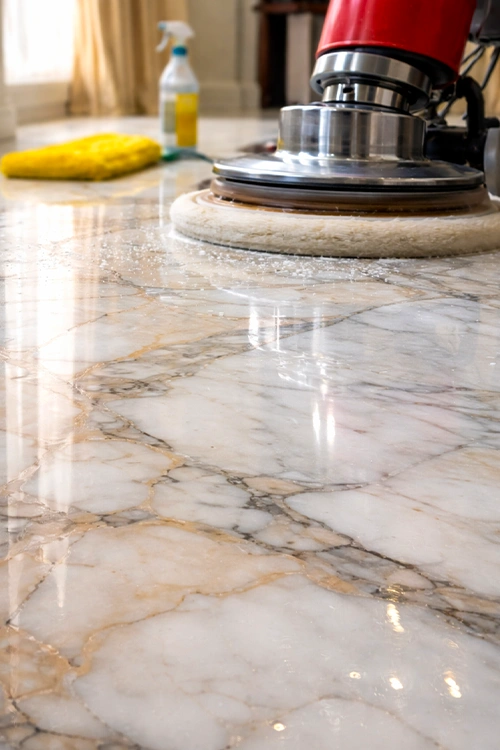
The compound reacts with the calcium carbonate in the stone to form calcium fluorosilicate, leaving a surface up to 30% harder than untreated marble. That is a chemical transformation of the stone itself, which is why it gives you a durability no coating or wax can come close to.
-
Deep Natural Shine from Within
A surface coating sits on top and wears off fast. Crystallization does the opposite, producing its high-gloss shine from within the stone. Because the reflective finish is part of the marble's own molecular structure, it has a depth and clarity that looks completely natural rather than applied.
-
Stain & Scratch Resistance
The hardened crystalline surface stands up to scratching from foot traffic, sand and furniture movement, and it repels liquid rather than soaking it up. That protection matters most in the high-traffic areas, the lobbies, the corridors, the main living spaces, where the wear would otherwise be heaviest.
-
Long-Lasting Results
Residential marble holds its crystallized finish for 6 to 12 months between treatments. A commercial space with heavy foot traffic usually needs retreating every 3 to 6 months. Either way, because it works with the stone rather than coating it, crystallization is the most cost-effective marble maintenance option there is.
Marble Crystallization — Project Gallery
Explore our completed marble crystallization projects showcasing quality craftsmanship and attention to detail.
Frequently Asked Questions
What is marble crystallization?
It is a thermochemical treatment where a compound, usually containing magnesium fluorosilicate, is worked into the marble with a weighted machine. The heat and friction react with the calcium carbonate in the stone to form calcium fluorosilicate, a surface up to 30% harder and far more reflective than untreated marble. The shine comes from within the stone rather than from a coating on top.
How long does marble crystallization last?
In a home, 6 to 12 months between treatments. In a busy commercial space it is usually 3 to 6 months. It depends on the foot traffic, the sand exposure and how the floor is cleaned day to day.
Can crystallization fix scratched marble?
It handles light scratches, swirl marks and etch marks well. For deep scratches or an uneven surface, we grind the marble first, then crystallize as the finishing step, since grinding alone cannot deliver the hardness and shine that crystallization adds.
Is crystallization safe for all marble types?
It works on marble and the other calcium-based stones, travertine and limestone included, since the reaction relies on the calcium carbonate content. It is not suitable for non-calcium stones like granite, though. We check the stone first and recommend the right treatment for it.
What is the difference between marble crystallization and marble polishing?
Polishing physically grinds a thin layer off the stone to expose a fresh surface, so it slowly thins the marble over time. Crystallization removes no material at all; it chemically hardens and shines the existing surface. The two are often used together, grinding or polishing first, then crystallization to harden and finish.
What Our Clients Say
Trusted by homeowners and businesses across Abu Dhabi & Dubai
“Delight completed a full villa renovation including painting, flooring and fit-out work. The project was managed professionally from start to finish. Quality craftsmanship and great attention to detail throughout.”
“Excellent painting and deep cleaning service. The team was very professional and completed the work on time. The villa looks brand new after their service. Very satisfied with the results.”
“We have annual maintenance contract with Delight IFM, they are providing excellent service for our AC, plumbing and electrical issues. The technicians are skilled and always arrive on time. Highly recommended for AMC services.”